A small gray and white bird has just landed on your fence. You observe it for a few seconds, and then it flies away. It’s impossible to put a name to it. This scenario repeats itself in most French gardens, where several species share the same color duo without resembling each other in behavior or silhouette.
Silhouette and posture: the first filter before plumage
Before looking at the colors in detail, observe the general shape of the bird. A round and stocky body does not point towards the same species as a slender and elongated silhouette, even if both are gray and white.
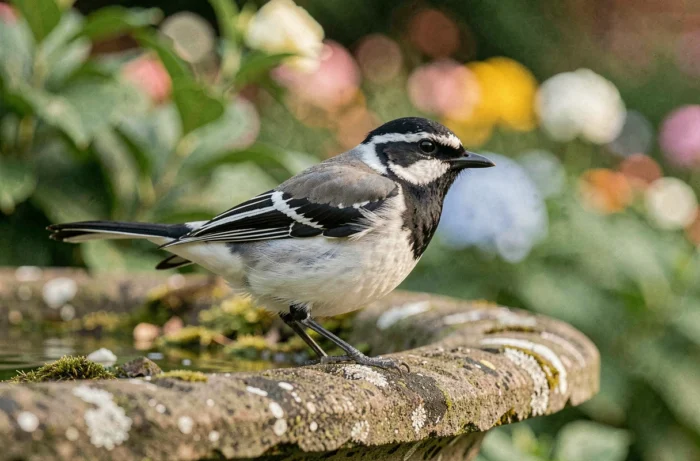
The gray wagtail, for example, is first recognized by its long tail that it constantly shakes up and down. This movement is so characteristic that you can identify it from a distance, without even distinguishing the details of its plumage. It walks on the ground, often on terraces or paths, rather than hopping.
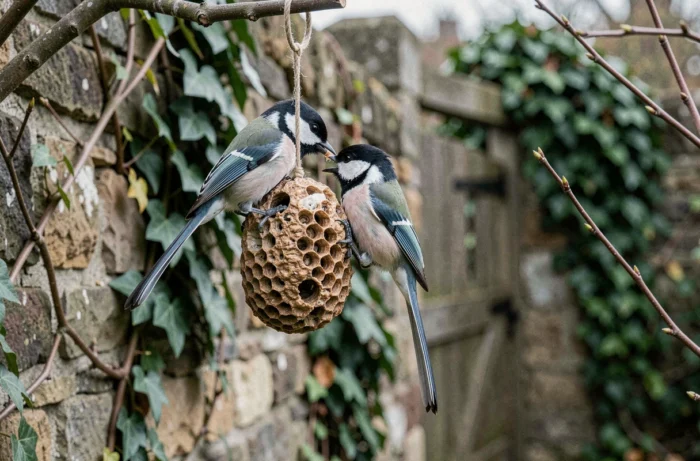
In contrast, the long-tailed tit (black cap, white cheeks, gray-brown back) clings to branches and feeders. Its posture is acrobatic, upside down one second, right side up the next. Two gray and white birds, two behaviors that you can spot even before taking out your binoculars.
To delve deeper into the process and recognize a gray and white bird methodically, starting with the silhouette and movement remains the most reliable reflex.
Identifying a gray and white bird by beak and size
You have noted the silhouette. Now move on to two complementary criteria: relative size and beak shape. These two elements are often enough to distinguish the most common species.
Compare the size to a known reference
You probably know the house sparrow. Use it as a benchmark. Is the bird you are observing smaller, the same size, or significantly larger? The gray flycatcher, for example, is about the size of a sparrow, while the gray wagtail appears more elongated due to its tail. A wood pigeon, gray with white markings on its neck, is much larger than these two species.
Reading the shape of the beak
The beak reveals what the bird eats, and this information helps in identifying it.
- A fine and pointed beak (like that of the wagtail or flycatcher) indicates a primarily insectivorous diet. The bird hunts flies, larvae, and small invertebrates.
- A short and conical beak (like that of the male house sparrow, gray and white on the belly) indicates a granivorous diet. It frequents seed feeders and forages on the ground.
- A robust and thick beak, wider at the base, points towards the hawfinch, whose plumage mixes gray, brown, and white. It cracks cherry pits with remarkable force.
The shape of the beak narrows down the possibilities faster than the color of the plumage. A beginner who retains this reflex saves considerable time.
Gray and white plumage: the most common species in the garden
Once you have noted the silhouette, size, and beak, you can refine your identification with the patterns of the plumage. Here are the species you are most likely to encounter in a French garden.
The gray wagtail
Gray back, white belly, white face with a black throat patch. The tail is long, black edged with white. It frequents open areas, roofs, parking lots as well as lawns. Its constant tail bobbing is an unmistakable clue.
The gray flycatcher
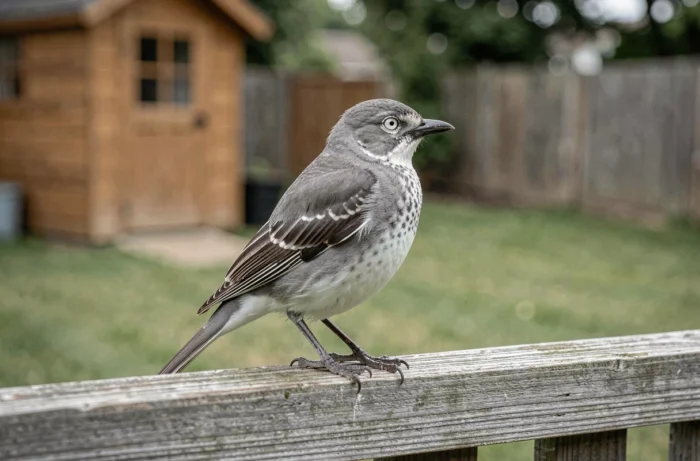
Discreet plumage, gray-brown on top, white-gray underneath with fine streaks on the chest. It perches prominently on a clear branch, suddenly flies off to catch an insect in mid-air, then returns exactly to the same spot. This back-and-forth hunting behavior distinguishes it from any other gray species in the garden.
The female house sparrow
People often think of the male with its brown cap and black throat patch. The female, however, is entirely in shades of gray-beige and off-white, without striking distinctive markings. It is often she, the “mystery” gray and white bird perched on the windowsill. Her small size, conical beak, and presence in groups near homes give her away.
Photo identification apps: a useful shortcut for beginners
In recent years, mobile applications based on artificial intelligence have allowed for the identification of a bird from a simple photo taken with a smartphone. Tools like Lensapp rely on data from monitoring programs, including the Garden Bird Observatory, to suggest a likely species based on the region and season.
These applications do not replace direct observation, but they provide a concrete starting point. You take a photo, even a blurry one, and the algorithm suggests two or three possible species. Cross-referencing the app’s result with your observations of silhouette and beak makes identification much more reliable than either one alone.
Attracting and observing gray and white birds in your garden
You have spotted some gray and white visitors. To see them regularly, a few simple adjustments are enough.
- Installing a shallow water point attracts the gray wagtail and sparrows, who enjoy bathing there all year round.
- Leaving a corner of lawn uncut encourages the insects that the gray flycatcher and wagtail feed on.
- Putting up a feeder filled with sunflower seeds attracts tits and sparrows, which you can then observe from a short distance and compare their plumages.
- Planting berry shrubs (elderberry, hawthorn) provides a natural pantry in autumn and winter.
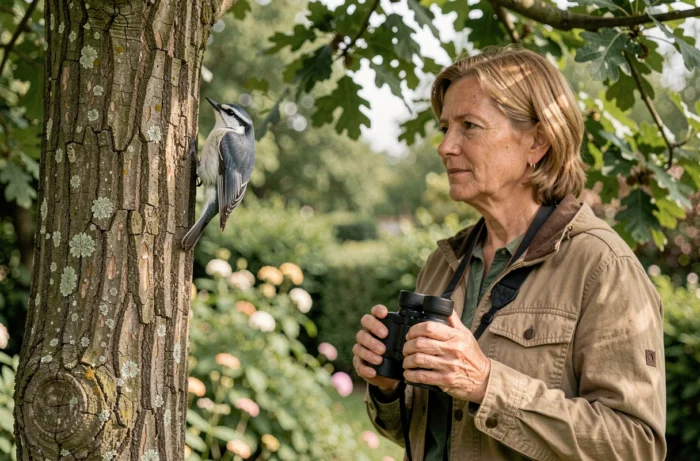
Regular observation from the same spot, at a fixed time, remains the most effective method for learning. In a few weeks, you will spontaneously associate a silhouette with a name without needing to consult a guide at every sighting.
The next time a gray and white bird lands on your fence, start with its posture, then look at its beak. With these two clues, you will have eliminated most possible species even before checking the plumage patterns.