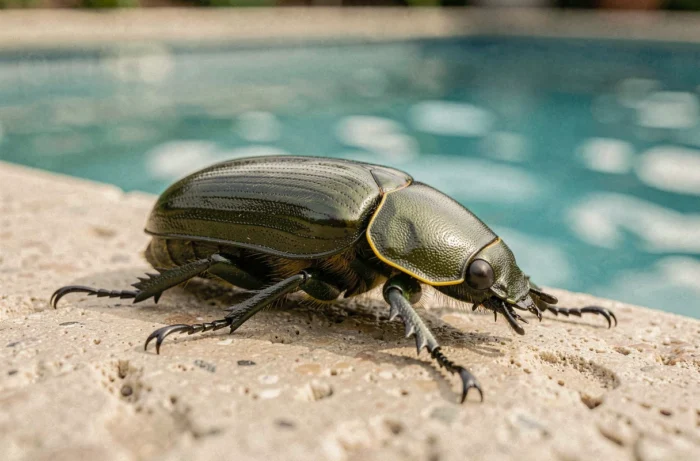
The dytiscus is an aquatic beetle whose larva, sometimes called “water tiger,” has mandibles capable of piercing human skin. The pain felt when coming into contact with this insect in a pool resembles a sharp sting, often compared to that of a wasp. Understanding the mechanics of this bite and the appropriate response can help avoid any disproportionate reaction.
Dytiscus bite or sting: mechanism and actual pain
The word “bite” can be misleading. The adult dytiscus does not bite in the strict sense: it pinches the skin with its mouthparts when a swimmer disturbs it. The most exposed areas are the toes and the soles of the feet.
The dytiscus larva acts differently. Its hook-shaped mandibles penetrate the flesh more decisively. The contact produces an acute and localized pain, disproportionate to the size of the insect. The skin reddens, slight swelling appears, and itching may last for a few hours.
A comprehensive file addresses the dytiscus bite in pools from an entomological and medical perspective, for those who wish to delve deeper into the subject.
The reaction remains mild in the vast majority of cases. The dytiscus is neither venomous nor a disease vector. It is often confused with the notonecte, another aquatic insect commonly found in pools, but the first aid measures are identical for both situations.

First aid after a dytiscus bite in a pool
The recommendations from the French Red Cross for insect stings and bites provide an immediately applicable framework at the poolside. Three steps are sufficient.
- Clean the bitten area with clear water and mild soap. The chlorinated water of the pool does not replace proper cleaning, even on a superficial wound.
- Apply a cold compress or an ice cube wrapped in a cloth for about ten minutes. The cold limits swelling and quickly soothes the pain.
- Monitor the evolution in the following hours. Progressive swelling, breathing difficulties, or general malaise warrant immediate medical consultation.
Severe allergic reactions remain exceptional, though not entirely ruled out. No antivenom or specific treatment exists for this type of bite. An oral antihistamine can relieve itching if it persists.
Dytisci and notonectes: differentiating aquatic insects in your pool
Correctly identifying the responsible insect is crucial for the next steps. Dytisci and notonectes inhabit the same pools, but their behavior differs in a key aspect.
The dytiscus swims belly down. Its flattened hind legs, like paddles, propel an oval body, brown to black, a few centimeters long. It surfaces at regular intervals to renew the air trapped under its elytra.
The notonecte actively stings swimmers, while the dytiscus mostly bites in a defensive reaction. Dytiscus larvae, slender and elongated, are more aggressive than adults. They bite anything that comes within reach of their mandibles.
Why these insects end up in the pool
Dytisci are capable of flying. They often move at night, attracted by nearby light sources near the water. A pool light turned on in the evening acts as a signal.
Calm, warm water containing microorganisms (algae, mosquito larvae) replicates the conditions of a natural pond. A pool with a chlorine level that is too low or with insufficient filtration becomes an attractive habitat where insects find both food and breeding conditions.
Eliminating dytisci from the pool: chlorine, filtration, and prevention
Two complementary levers can solve the problem: correcting the water chemistry and removing attraction factors.
Adjusting water treatment
A shock treatment with chlorine, temporarily raising the dose well above the usual maintenance level, makes the environment inhospitable for dytisci and their larvae. This shock also eliminates the microorganisms that these insects feed on.
Subsequently maintaining a stable chlorine level and regularly checking the pH prevents recolonization. Properly treated water attracts far fewer aquatic insects.
Optimizing filtration and covering the pool
Filtration should run long enough each day to circulate the entire volume of water. Dytisci prefer calm waters: continuous movement discourages them from settling.
- Covering the pool at night with a tarp limits access to flying insects and reduces the light attraction of the surface.
- Turning off or reducing outdoor lighting near the pool after swimming significantly decreases nighttime influx.
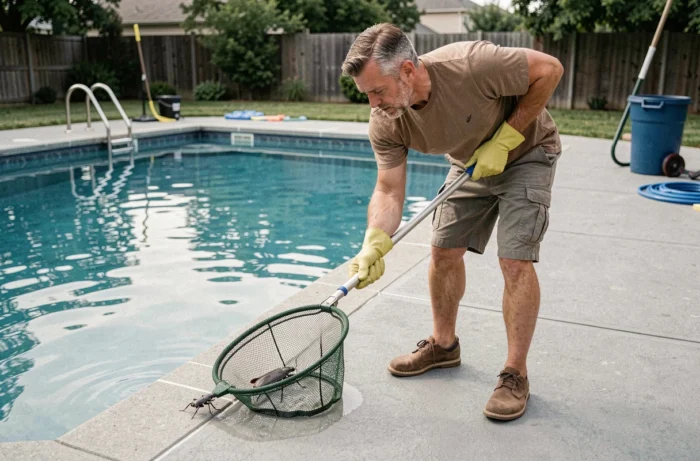
- Using a net daily to remove insects from the surface prevents the establishment of a breeding population.
- Eliminating stagnant water sources around the pool (saucers under pots, poorly stretched tarps) removes alternative breeding areas that sustain the local population.
Chemical insecticides are not recommended in swimming pool water. Their toxicity to swimmers outweighs the inconvenience caused by dytisci, and they disrupt the water chemistry in the long term.
An appropriate chlorine treatment, effective filtration, and a few daily preventive measures are sufficient to make the pool inhospitable for these beetles. A regularly maintained pool remains, in practice, the most reliable way to no longer find dytisci at the bottom of the pool.