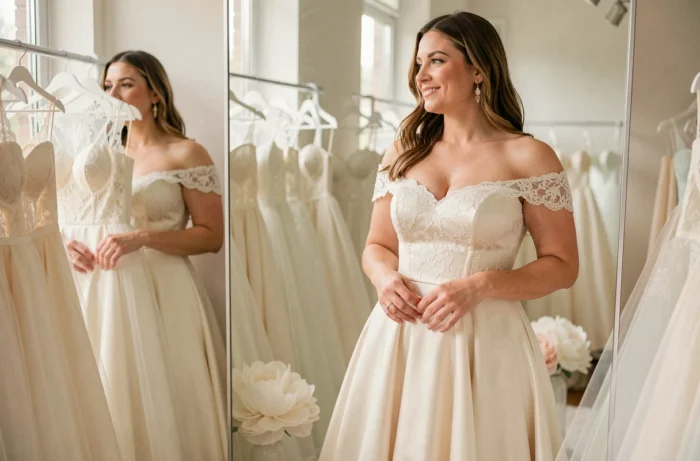
Choosing a wedding dress is not just about finding a cut that suits your body shape. The comfort of movement, the fabric, the ability to transform the outfit between the ceremony and the evening: these concrete criteria weigh as much as the silhouette in the success of a fitting. Here’s how to approach this choice by considering what really changes the final result.
Modular wedding dress: thinking of the outfit as an evolving set
You may have already noticed that the dress worn at the town hall, standing and static, is nothing like the one you need to wear for three hours of dancing? This is precisely why recent bridal collections offer removable elements: detachable sleeves, overskirts, buttoned trains.
The interest is twofold. First, a modular dress adapts to each moment of the day without requiring a complete outfit change. Secondly, it allows you to adjust the apparent volume of the silhouette according to the context. An overskirt in tulle worn during the ceremony creates a princess effect, then, once removed, reveals a straight or mermaid cut for the evening.
This principle of modularity goes beyond the question of body shape. It addresses a practical need that many future brides underestimate during the first fitting: being able to move, sit, raise their arms without the fabric pulling or wrinkling. Before focusing on the shape of your hips or shoulders, test the freedom of movement. It is this that determines whether you will be comfortable all day.
To delve deeper into the subject of cuts suitable for each body type, wedding advice on Info Mariage details the associations between dress shapes and body types.
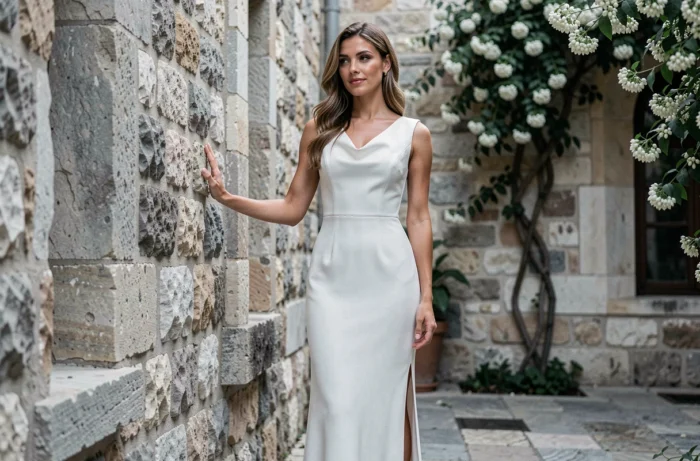
Dress cuts and body shape: what really matters during fitting
Classic guides associate each letter (A, V, H, X, O) with a list of recommended cuts. This grid is a starting point, not an absolute rule. The ideal cut also depends on the height of the bust and the curvature, two parameters rarely mentioned.
Defined waist or long waist: two different approaches
An X-shaped silhouette with a very short waist (little space between the bust and hips) does not react the same way to a corset as an X-shaped silhouette with a long bust. In the first case, a too-structured bodice can flatten the torso. An empire cut, which places the seam under the bust, frees the belly and visually elongates the bust.
For H-shaped bodies (shoulders and hips aligned, little defined waist), the usual reflex is to look for a belt or a fitted cut that “creates” the waist. This is effective when the fabric is soft. On a rigid satin, the belt creates an unsightly crease. The choice of fabric alters the effect of a cut as much as the cut itself.
Wide hips: volume or fluidity
The princess cut (voluminous tulle skirt) is often recommended for A-shaped silhouettes because it masks the hips. This is true, but it also adds overall volume. On a petite woman, this excess material can compress the silhouette instead of balancing it.
The alternative: an A-line skirt in crepe or chiffon, which glides over the hips without emphasizing or hiding them. The drape is more natural, and the walking comfort is significantly better.
- To balance narrow shoulders and wide hips, prefer a Bardot neckline or short sleeves that widen the upper body.
- For a V-shaped silhouette (shoulders wider than hips), a skirt with movement (pleats, light ruffles) rebalances the proportions downward.
- For O-shaped bodies, an empire waist combined with a fluid fabric structures the silhouette without compressing the belly.
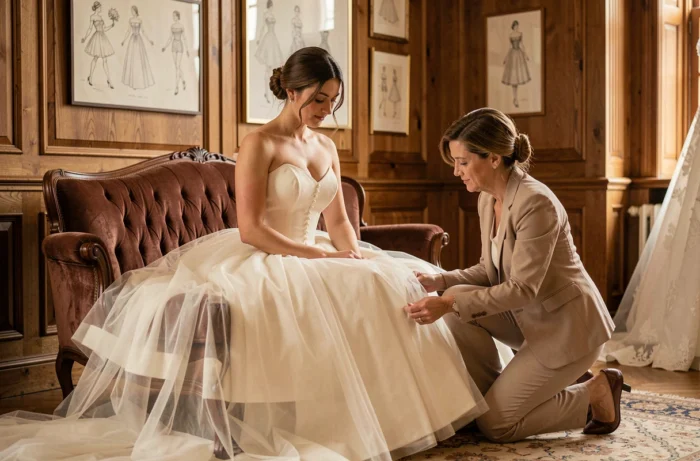
Alterations and fitting: pitfalls to avoid before ordering
Alterations are not always included in the price of the dress. This is a point that many future brides discover after placing their order. Conditions vary by workshop: some include one or two fittings with adjustments, while others charge for each modification separately.
Before signing, ask in writing for the cost of alterations, the number of fittings planned, and the time frame between final approval and delivery. A change in body shape between the order and the wedding (weight gain or loss, pregnancy) can lead to significant modifications that the initial quote did not cover.
Label size and actual size
If you are considering a second-hand dress or an inherited dress, do not rely on the number on the label. Size standards have changed over the decades. A vintage dress labeled 40 may correspond to a current 36. The only reliable method is to compare your measurements (bust, waist, hip) with those of the dress, measured flat.
An old dress may also require restoration work (weakened fabric, damaged lace) that involves a different skill set than standard alterations. The budget and timeline should then be assessed with a specialized professional.
Choosing your wedding dress: the criterion that no one tests in the fitting room
In the fitting room, we look at ourselves in the mirror. We turn, we observe the silhouette from the front, from the side. But the real test of a wedding dress is sitting in it during a meal, walking on grass, climbing stairs.
Test each dress in motion, not just in a static pose. Raise your arms, bend down, sit on a chair. If the bodice rides up, if the skirt catches your knees, if the straps dig into your shoulders after five minutes, these flaws will only worsen over an entire day.
The choice of a wedding dress relies on a balance between what flatters the silhouette and what allows you to fully experience every moment. A perfect cut in the mirror but uncomfortable to wear will never fulfill its role. Start with your comfort, then adjust the cut: it is in this order that the best fittings are built.