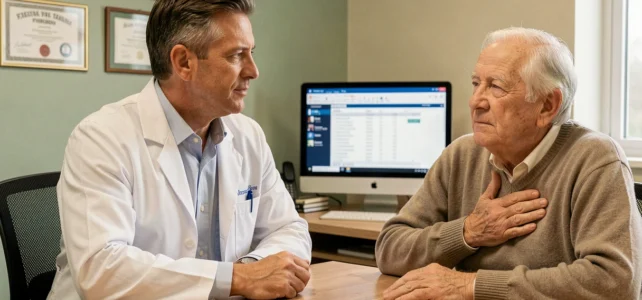
A patient is discharged from the hospital after an exacerbation of COPD. The pulmonologist has stabilized the crisis, the report is ready, but the real challenge begins: organizing coherent follow-up care in the community in the days following the return home. This is precisely where the PRADO COPD program intervenes, structuring the coordination between the hospital and liberal healthcare professionals around the attending physician.
The program does not replace hospital care. It extends the care pathway by relying on a precise assessment of each patient, conducted even before discharge.
Initial PRADO COPD Assessment: What Happens Before Hospital Discharge
We often talk about post-hospitalization follow-up, but the work begins inside the facility. A Health Insurance Advisor (CAM) visits the patient, deemed eligible by the medical team, during their hospitalization. This first contact serves to lay the groundwork for the return home.
The CAM identifies the patient’s general practitioner, the referring pulmonologist, the registered nurse, and the physiotherapist chosen by the patient. They organize appointments according to a precise schedule: an appointment with the attending physician within seven days following the return, a pulmonology consultation within two months.
At this stage, we better understand why the PRADO COPD assessment by the general practitioner is a central link in the program: without this quick consultation in the community, the risk of readmission significantly increases.
The CAM also provides the attending physician with the names of all the involved parties and ensures, in the following weeks, that the appointments have indeed taken place. The patient receives a follow-up booklet, a communication tool shared among the various liberal healthcare professionals.
Patients Eligible for PRADO COPD: Concrete Inclusion Criteria
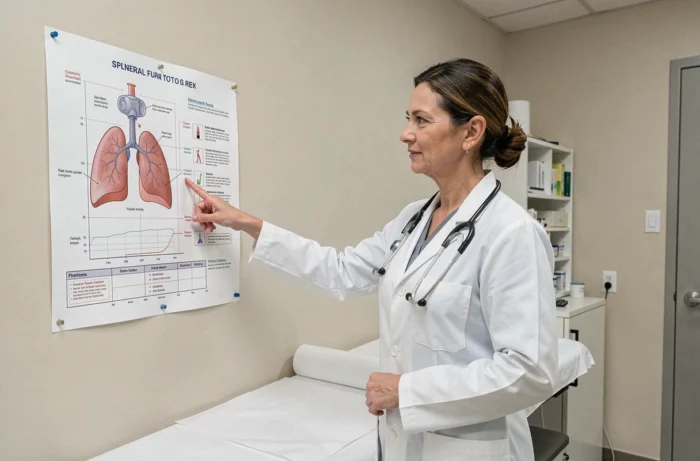
The PRADO COPD program does not concern all patients with chronic obstructive pulmonary disease. The program specifically targets patients hospitalized for an exacerbation of COPD, meaning an acute worsening of respiratory symptoms that required hospitalization.
In practice, the hospital team notifies the CAM when several conditions are met:
- The patient is hospitalized for an exacerbation of COPD (not for another associated pathology only)
- Their clinical condition allows for a return home, without the need for transfer to follow-up care
- The patient voluntarily agrees to participate in the program, after being informed by the CAM
- An attending physician is identified or identifiable to ensure follow-up in the community
Patients with associated heart failure may fall under another aspect of PRADO (heart failure), but the two pathways do not automatically overlap. Feedback on this point varies according to facilities and regions.
Role of the General Practitioner in PRADO Follow-Up After Exacerbation
The appointment within seven days is not just a simple administrative formality. The attending physician must assess the patient’s respiratory condition, verify their understanding of the discharge treatment, and adapt the care to real-life living conditions.
In practice, this consultation covers several specific points. The general practitioner checks the inhalation technique, often deficient after a hospitalization where the patient received nebulizations. They reassess smoking cessation if the patient still smokes, since quitting smoking remains the main factor in slowing the decline of FEV1.
The physician also checks that vaccinations are up to date. Current recommendations include influenza, pneumococcal, and anti-Covid-19 vaccinations for COPD patients. Vaccination against RSV is now mentioned for patients over 65 years old.
Follow-up does not stop at this first consultation. The general practitioner then coordinates the interventions of the home nurse (therapeutic education, symptom monitoring) and the physiotherapist (respiratory rehabilitation). The PRADO follow-up booklet serves as a guiding thread among all these actors.
ESCAP and PRADO COPD: What Coordinated Practice Changes for the General Practitioner
Since March 2025, Coordinated Care Teams With the Patient (ESCAP) offer a new framework for practice in the community. This system requires the presence of the attending physician within the team, which concretely changes the organization of follow-up for chronic patients, including those coming out of a PRADO COPD.
The benefit for the general practitioner is direct: the formalized sharing of information between professionals replaces informal exchanges. Where the PRADO follow-up booklet relies on the goodwill of each participant, ESCAP structures coordination with mutual obligations.
For COPD patients, this means closer follow-up between the attending physician, the pulmonologist, the nurse, and the physiotherapist. The general practitioner is no longer just a point of passage post-hospitalization: they become the pivot of a team identified around the patient.
Assessing Severity in the Community: Tools Available to the Attending Physician
Annual spirometric follow-up remains the reference for measuring the progression of the disease. FEV1 (forced expiratory volume in one second) is the main prognostic factor in the GOLD classification of COPD.
In daily practice, the general practitioner also has the CAT questionnaire (COPD Assessment Test) to monitor the impact of symptoms between two pulmonary function tests. This standardized score quantifies dyspnea, cough, chest tightness, and activity limitations experienced by the patient.
A more recent tool deserves attention: the PREM-C9, validated to measure the experience of COPD patients across three domains (daily life, usual care, experience of exacerbations). Its integration into PRADO follow-up is not yet systematic, but it offers the general practitioner a complementary framework to assess what clinical scores do not capture.
The PRADO COPD program only works if each actor plays their role within the expected timelines. The general practitioner, by ensuring this quick consultation and coordinating community follow-up, directly contributes to reducing the risk of readmission. With the arrival of ESCAP, this coordination now has a more structured framework, which should facilitate daily work for practitioners involved in supporting COPD patients.