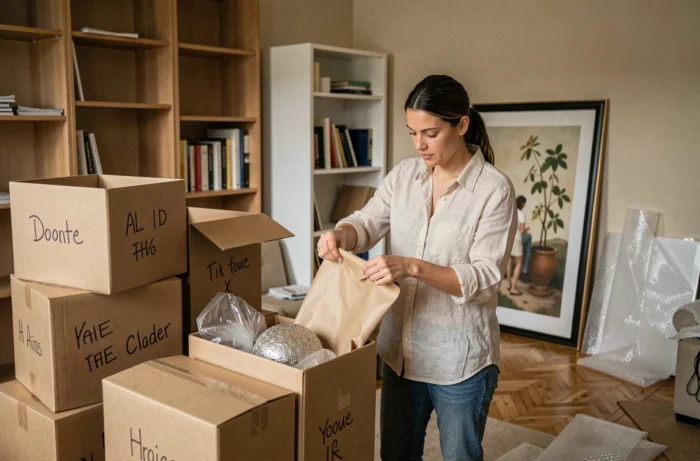
A well-orchestrated move in terms of decoration is not just about filling boxes with knick-knacks. The transition phase between two homes is the most strategic moment to rethink the layout, purge accumulated decorative mistakes, and prepare a coherent interior from day one in the new place.
Color palette and volumes: anticipating decor before packing
We recommend taking precise measurements and noting the light orientation of each room in the future home before touching a single box. A sofa that worked in a south-facing living room can visually overwhelm a north-facing space, which is cooler in color temperature.
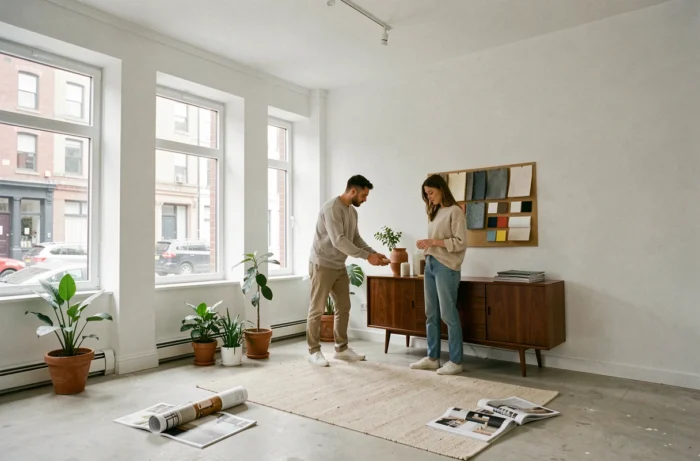
Photograph your current walls, floors, and woodwork in the new home. Compare them to your existing textiles, curtains, and cushions. Eliminate any decor elements that are incompatible with the new palette before packing. Transporting an ochre curtain that clashes with a gray ash floor is unnecessary volume in the truck and guarantees a corrective purchase within two weeks.
To effectively plan the move with Murmures Déco, this preliminary color diagnostic step avoids costly back-and-forth trips between the new home and the dump.
Create a rough layout plan (even if sketched by hand) with the intended locations for each bulky piece of furniture. This determines the loading order of the truck: furniture destined for the back rooms is loaded first.
Decor sorting before moving: the method by function, not by room
Most guides recommend sorting room by room. In decoration, this approach leads to keeping duplicates and orphaned items. We advocate for sorting by decorative function.
Physically group all your items according to their role in the space:
- Ambient lighting elements (table lamps, garlands, candles): keep only those whose color temperature matches the desired atmosphere in the new home
- Decorative textiles (throws, cushions, curtains, tablecloths): eliminate anything that has dimensions unsuitable for the new openings or new furniture
- Wall objects (frames, mirrors, open shelves): measure the ceiling height of the future place, as a large vertical mirror loses its effect in a low room
- Decorative containers (vases, baskets, boxes): keep only those that also serve a real storage function
This functional sorting significantly reduces the transported volume compared to sorting room by room, as it forces you to confront each item with its actual utility in the future layout.
Packing fragile decorative items: professional cushioning techniques
Decorative items are often the least protected during a move. Unlike dishware, they have irregular shapes (sculptures, asymmetrical vases, frames with glass) that complicate standard cushioning.
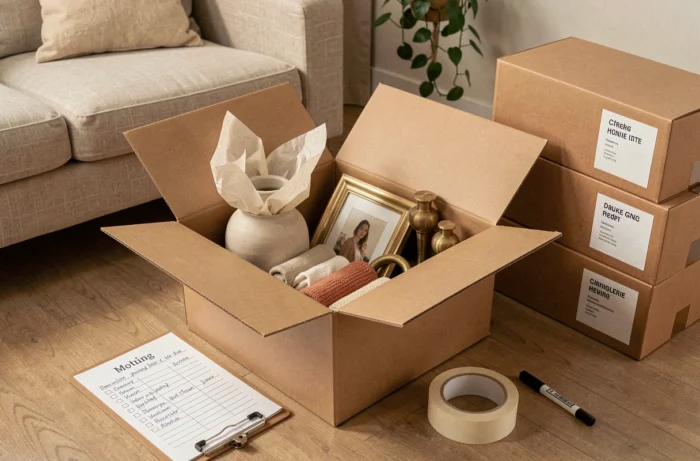
Each fragile item should be individually cushioned with crumpled kraft paper, never with newspaper whose ink stains porous surfaces like matte ceramics or plaster. For frames with glass, apply cross tape on the glass before packing: if the glass breaks in transit, the shards remain attached to the tape instead of tearing the rest of the box.
Cushioning lamps and lampshades
Fabric lampshades should be transported stacked from largest to smallest, separated by tissue paper, in a dedicated box that receives nothing else. A lampshade crushed by an art book is irreparable.
Ceramic or glass lamp bases should be protected with thick socks slipped around the neck, then cushioned vertically. Never lay a lamp base down in a box: lateral pressure during transport is enough to crack a stoneware base.
Security deposit and inventory: the often-overlooked financial aspect
Decoration is not disconnected from the administrative aspects of moving. Wall plug holes, mounting marks, and remnants of fancy paint directly influence the exit inventory.
The landlord has a one-month deadline to return the security deposit if the exit inventory is compliant, and two months in case of observed damages. A delay in return results in an automatic increase. Filling in the mounting holes, removing double-sided adhesives, and restoring the walls to their original color before the inventory inspection directly protects your budget.
For tenants on mobility leases, the situation is different: no security deposit can be required. This framework concerns an increasing number of transitional moves and alters the decor strategy, as non-invasive fixings (adhesive hooks, removable picture rails) will be prioritized from the installation.
Financial assistance for installation
The Housing Solidarity Fund (FSL) can, depending on the departments, cover part of the security deposit, the first rent, or home insurance. This lever remains underutilized even though it frees up budget that can be reallocated to the interior layout of the new home.
First days in the new home: prioritize immediate decor effect
We observe that psychological comfort in a new place depends less on the number of unpacked boxes than on three specific elements installed by the first evening: ambient lighting (not the bare ceiling light), a floor textile (rug or bedside mat), and a wall element visible from the main seating point.
These three visual markers are enough to transform a space cluttered with boxes into a livable area. The rest can wait. Resist the temptation to unpack everything within 48 hours: placement decisions made in haste become spatial habits that are difficult to correct later.
Leave the decor boxes closed for a week. Live in the empty space, observe the natural light at different times, identify shadow areas. Your placement choices will be all the more durable, and your move will have generated no decorative regrets.