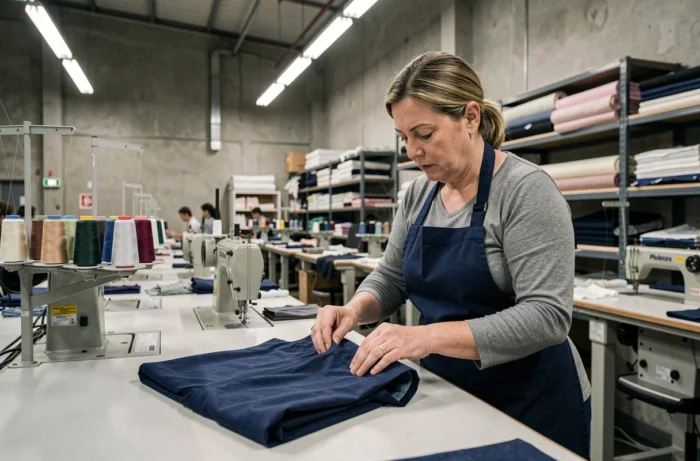
Zara owns only a fraction of its own manufacturing capabilities. The majority of production relies on a network of external suppliers spread across the Mediterranean basin, Southeast Asia, and increasingly, North Africa. Understanding textile manufacturing at Inditex first requires mapping these flows and the industrial decisions that govern them.
Relocation to Egypt: What the Closure of Factories in Turkey Reveals
The case of Eroğlu Giyim illustrates a rarely documented strategic shift. This supplier, which produces for Inditex, H&M, and PVH, has closed two factories in Turkey (Aksaray and then Çorlu), eliminating over 3,000 jobs. Production has been fully transferred to the Suez Canal economic zone and Ismailia in Egypt.
This shift is not insignificant. It reflects a logic of compressing labor costs that Turkey can no longer absorb, combined with tax advantages offered by Egyptian free zones. For Inditex, this means a supplier capable of maintaining the pace required by the fast restock model, at a lower unit cost.
Turkish unions have denounced threats of dismissal against workers who attempted to strike to protest these closures. The social issues surrounding Zara’s supply chain thus extend far beyond the audits published in annual reports. When studying the Zara factories and their manufacturing, this geographical recomposition is a frequent blind spot.
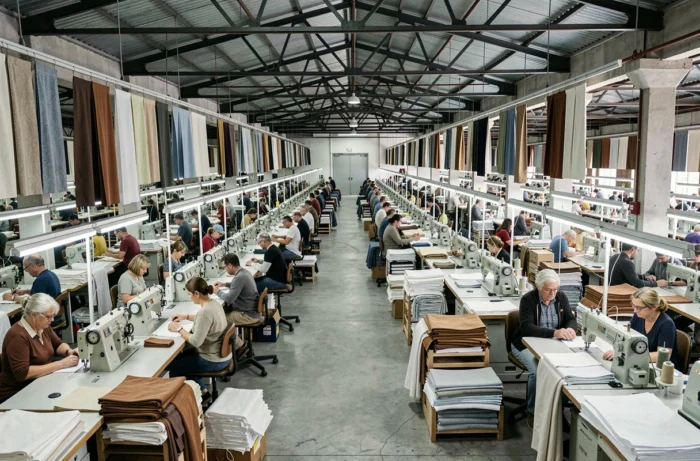
Zara Supply Chain: The Proximity Model versus Cost
Inditex has historically built its competitive advantage on proximity sourcing. Portugal, Morocco, and Turkey formed the triangle of rapid production, allowing delivery times to the Arteixo logistics center in just a few days. This model remains active, but it is cracking.
The share of production carried out outside the Mediterranean basin is increasing. The group publishes a list of suppliers on its website, without breaking down volumes by country. We observe that the number of suppliers listed in Bangladesh, Vietnam, and Cambodia has multiplied in recent years, particularly for high-turnover basics.
The operation relies on precise segmentation:
- Trendy items with short cycles (two to three weeks between design and shelf placement) are still produced close to Galicia, mainly in Portugal and Morocco.
- Basics and predictable volumes (plain t-shirts, underwear, standard denim) are produced in Southeast Asia, where labor costs allow for higher margins on low-priced items.
- Intermediate items, including coats and technical knitwear, are distributed between Turkey, Egypt, and Tunisia based on available capacities and ongoing pricing negotiations.
This segmentation explains why the same Zara store offers clothing with labels indicating very different origins. The group does not manufacture “in one place” but manages a modular production network.
Working Conditions at Inditex’s Textile Suppliers
Inditex’s annual report highlights a social audit program covering the entire supply chain. In practice, documented cases of anti-union pressure at direct suppliers complicate this narrative. The Eroğlu Giyim case in Turkey in 2025-2026 is not isolated.
Workers at subcontracted factories do not have Inditex employee status. This legal point is fundamental: the ordering group sets the pace, purchase prices, and quality standards, but the contractual relationship with the workers falls under the local supplier. In the event of closure or relocation, workers’ recourse is limited to the labor laws of the host country.
We recommend distinguishing two levels in the analysis:
- The “Tier 1” level, the final assembly factories, generally audited and publicly referenced by Inditex.
- The “Tier 2” level and beyond, the spinning mills, dye works, and raw material suppliers, where traceability remains partial and working conditions are harder to verify.
- Any informal subcontractors used during peak production, whose existence is regularly reported by NGOs but rarely confirmed by the group.
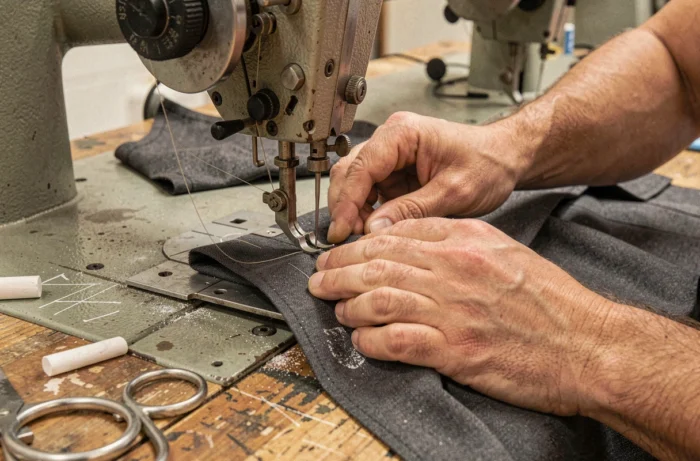
Zara Textile Production: What the Restock Model Imposes on Factories
The biweekly restock of Zara stores, often presented as a logistical feat, translates into very concrete industrial constraints for suppliers. Factories must absorb short-term orders with unpredictable volumes, which imposes a flexibility that only structures with a pool of temporary labor can offer.
The design center in Arteixo sends production orders that can be modified during manufacturing if in-store sales data indicate a trend change. A supplier in Portugal or Morocco may receive an order on Monday and have to ship by Thursday. This time pressure partly explains the preference for areas with low labor time regulations.
The Inditex model is not that of a brand that designs and then orders long in advance. It is a system of demand-driven production in near real-time, where each partner factory operates as an adjustable link. The group’s performance in terms of stock turnover and limiting unsold items directly relies on this ability to vary production volumes without long notice.
Textile manufacturing at Zara is less an industrial secret than a constant trade-off between speed, cost, and social risk. The closures of factories in Turkey in favor of Egypt, the increase in Asian suppliers for basics, and the pressure of restocking on production rates outline a model that optimizes commercial responsiveness, sometimes at the expense of the stability of workers at the end of the chain.