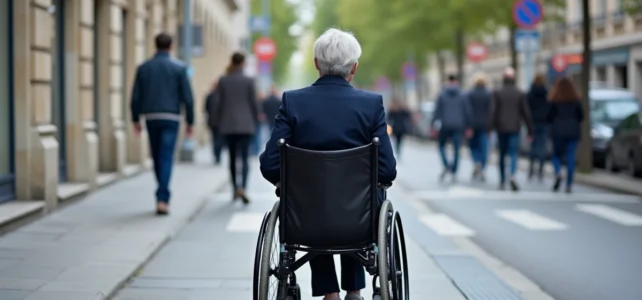
The acronym PMR is not limited to wheelchair users. It encompasses anyone whose mobility is restricted, either temporarily or permanently, due to a motor, sensory, or cognitive impairment, age, pregnancy, or the transport of bulky items. This broad definition, established in the early 2000s in European law, has direct consequences on the regulatory obligations that weigh on public establishments, roadways, and housing in France.
Digital Accessibility for PMR: The Regulatory Blind Spot
We observe a massive gap between the accessibility obligations of the built environment and those of the digital realm. Twenty years after the law of February 11, 2005, only 7% of public services online are accessible to people with disabilities. The problem directly affects PMR: a person with reduced mobility who cannot go to the prefecture relies on online procedures, but these platforms do not comply with digital accessibility standards.
Organizations identify this digital exclusion as a central issue. A poorly marked form, insufficient contrast, or the absence of keyboard navigation effectively prevents a wheelchair user or a visually impaired person from completing their administrative procedures. Physical accessibility of public spaces is improving, but administrative autonomy remains hindered by digital barriers.
To delve deeper into the definition of PMR and reduced mobility, it is essential to incorporate this digital dimension that escapes most analyses focused on the built environment and roadways.
MaPrimeAdapt’ and Funding for Housing Adaptation Works

The MaPrimeAdapt’ scheme, launched in 2024, modifies the economic model for accessibility works in private housing. This state aid finances housing adaptations for the elderly and disabled, with a coverage rate that can reach 70% of the cost of works depending on household income.
The eligible adaptations precisely correspond to the needs of PMR:
- Installation of a step-free shower in place of a bathtub, eliminating the step-over that poses a major fall risk
- Widening doorways to allow the passage of a wheelchair or walker
- Installation of grab bars and handrails in transfer areas (toilets, bathrooms, stairs)
- Motorization of roller shutters for individuals with limited upper limb mobility
MaPrimeAdapt’ can be combined with the tax credit for housing adaptation and the reduced VAT rate of 5.5% on accessibility works. We recommend checking eligibility before starting the works, as the combination of these three schemes significantly reduces out-of-pocket expenses.
Distinction Between PMR and Persons with Disabilities: Consequences for ERP Obligations
The confusion between PMR and persons with disabilities persists, even among ERP managers. This distinction has direct regulatory consequences. The term PMR encompasses a much broader scope than the disability recognized by the MDPH: a person with a stroller, a traveler with heavy luggage, or an elderly person without administrative recognition of disability are considered PMR in the regulatory sense.
The accessibility obligations for public establishments apply for the benefit of all PMR, not just holders of a mobility inclusion card. A business that installs a ramp meets the needs of a wheelchair user, but also of a parent with a stroller or a person on crutches after a fracture.
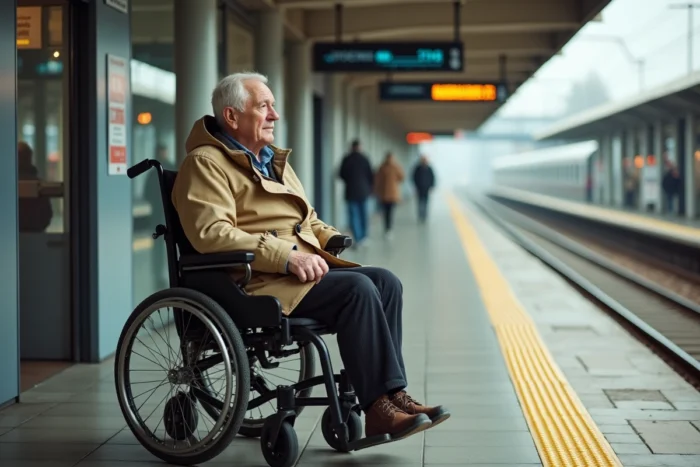
ERP accessibility standards target the PMR scope, not just motor disabilities. Passage widths, counter heights, contrasting signage, and guiding strips cater to various types of reduced mobility: motor, visual, auditory, cognitive.
Roadways and Public Spaces: Evolving Requirements
The regulations on accessibility of public spaces have recently been strengthened with obligations regarding curb cuts, tactile paving at pedestrian crossings, and accessible street furniture. Local authorities must integrate these requirements into their roadway planning.
Public transport constitutes a critical link. Accessible bus stops, raised platforms, and audible and visual announcements in transport networks condition the travel chain. A break in accessibility at just one link makes the entire journey impractical for a wheelchair user or a visually impaired passenger.
Accessible Housing: Beyond the PMR Bathroom
Making a home accessible is not limited to the adapted bathroom. We observe that adaptation projects frequently underestimate three technical points:
- Interior circulation: a corridor less than 90 cm wide does not allow for a wheelchair turn, even with a perfectly equipped bathroom
- Access to the housing itself: a front door threshold greater than 2 cm or the absence of a sufficient landing in front of the door blocks autonomy right from the entrance
- Kitchen ergonomics: countertop height, under-sink access for a wheelchair, cooking plate controls on the front
A comprehensive diagnosis of the housing before works prevents partial adaptations that leave obstacles in place. The PMR adaptation of a home should be thought of as a journey, room by room, from the entrance to the living spaces.
The regulatory framework, financial aids, and technical standards form a coherent whole, but their application remains fragmented. Reduced mobility affects a significant portion of the French population, well beyond just permanent motor disabilities. Integrating the digital dimension, funding for works, and the logic of the travel chain allows for a more comprehensive understanding of the subject.